
Last updated November 24, 2026
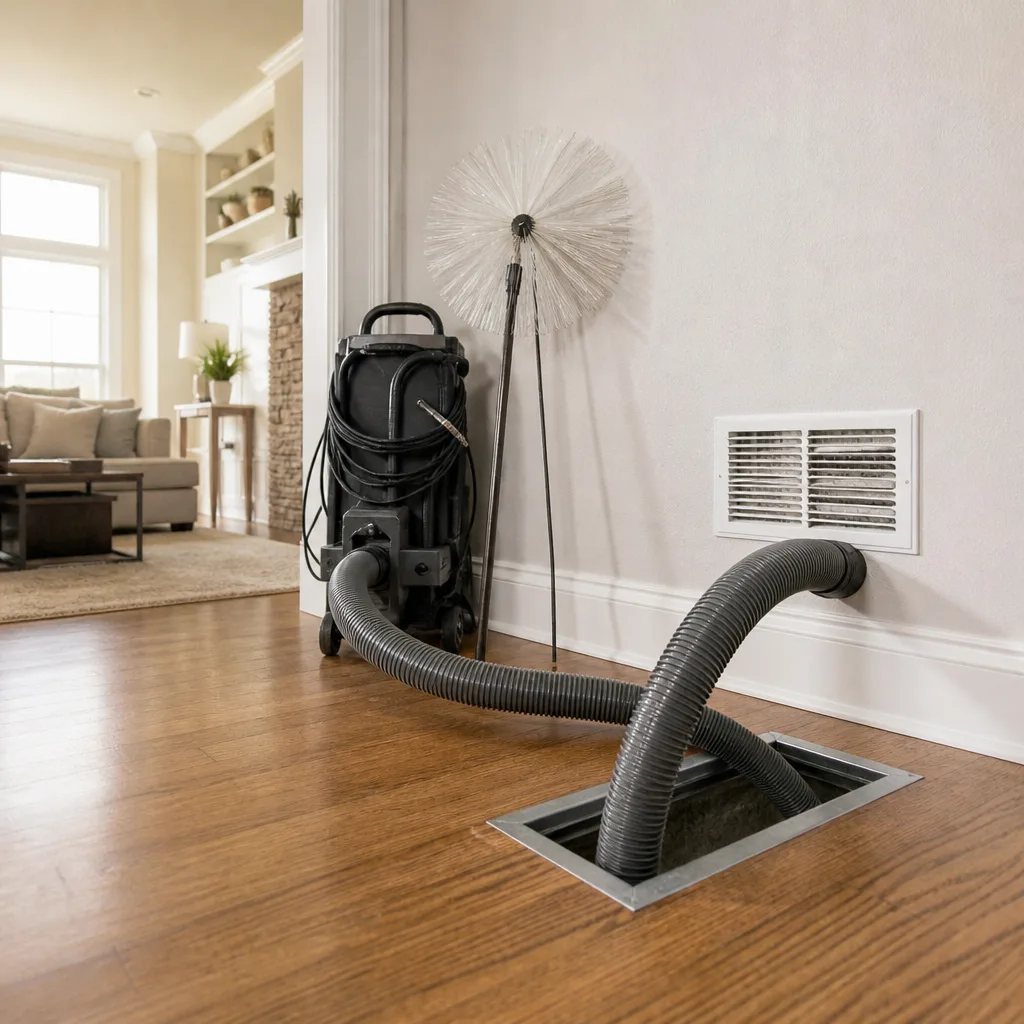 Whole-home duct cleaning
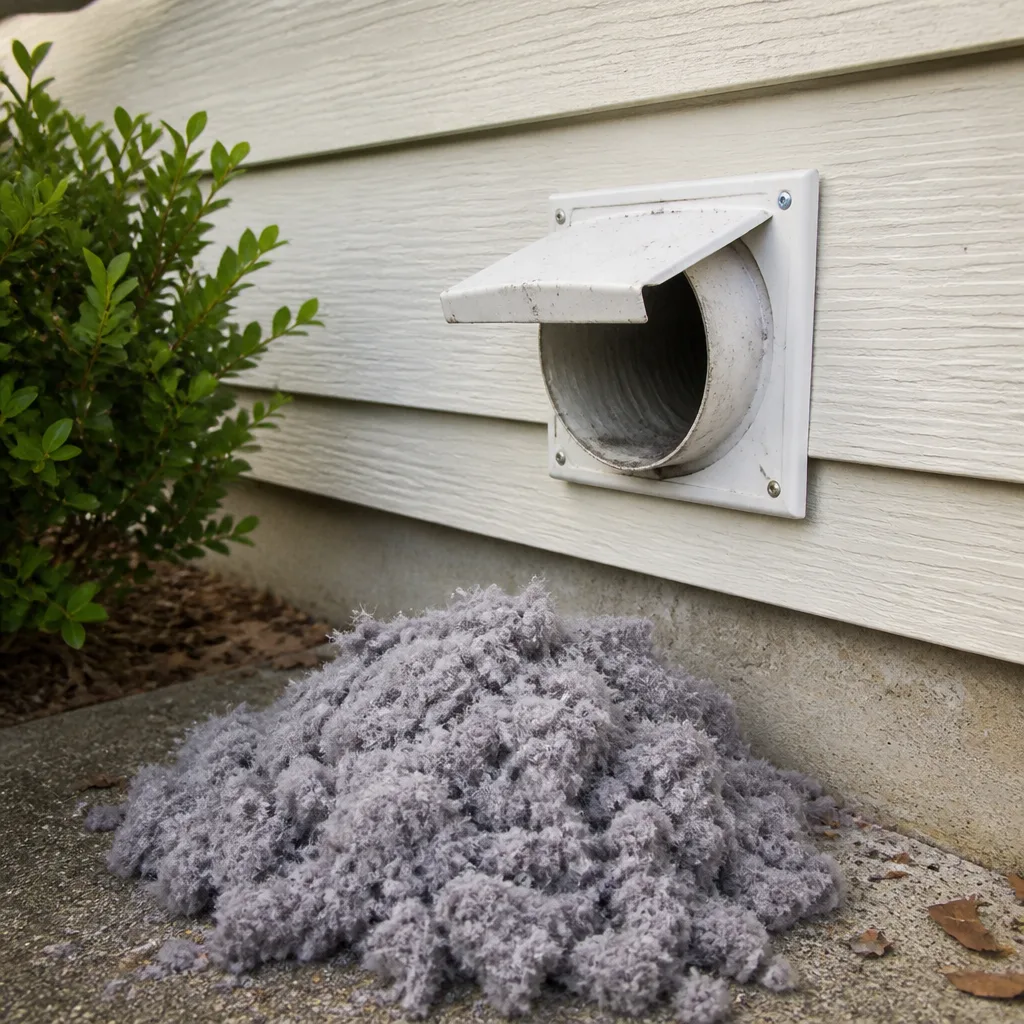 Dryer vent cleaning
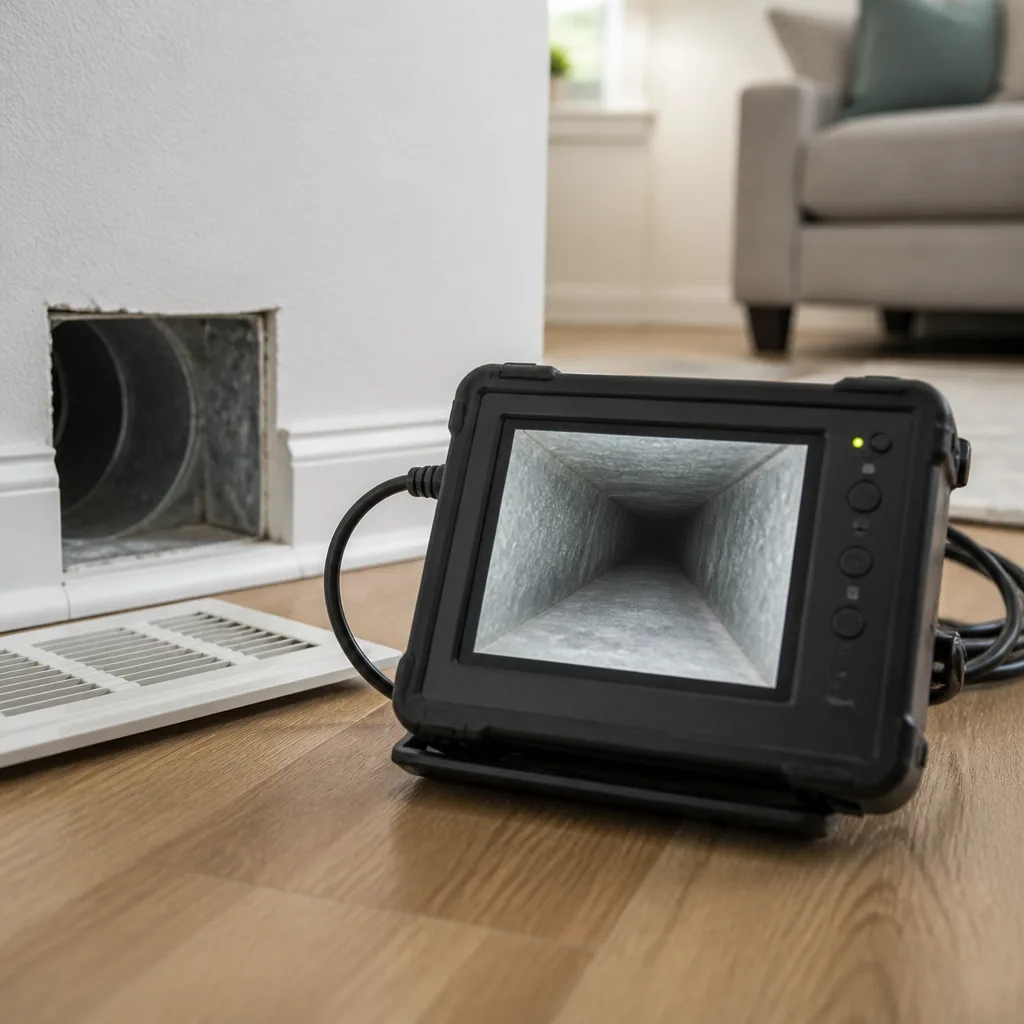 Camera inspection
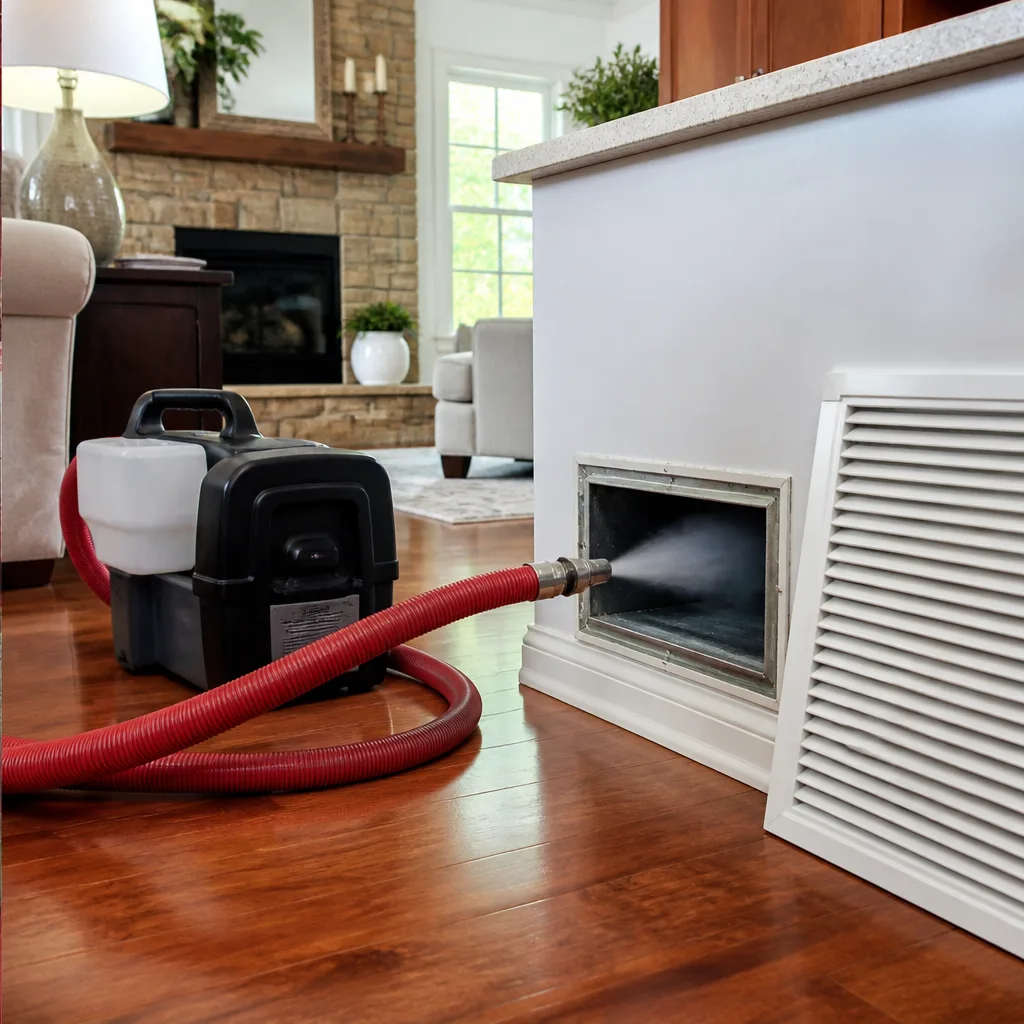 Sanitizing & deodorizing
Whole-system duct and dryer vent check with before-and-after photos - you see exactly what came out of your vents
That "$99 whole-house special" is a bait ad - the real number appears once they are in your hallway, or the "clean" is a shop-vac at the register. We photograph the inside of your ducts before and after instead.
Air Duct Cleaning Warning Signs: A New Dorp Homeowner’s Reference Guide
Most homeowners call a duct specialist at the point of no return – a visible patch of mold on a register, a burning smell, or a respiratory problem that sends someone to a doctor. By then, whatever is living inside the duct system has been growing for a while. A forced-air system in New Dorp actually sends warnings much earlier, but those warnings are quiet: a room that never quite catches up in summer, a dust layer on the furniture that returns faster than it used to, a filter that needs changing weeks ahead of schedule. This guide walks you through the six signals we’ve learned to read most reliably and explains which parts of the system each one points to.
Quick Answer
The clearest warning signs of dirty or damaged air ducts are uneven airflow from room to room, a musty or burning smell coming from registers, a filter that dirties faster than its stated interval, visible debris around grilles, and inconsistent dust buildup across the house. If two or more of these appear together, the duct system is usually behind them, not the equipment. An inspection normally settles the question quickly.
Styles & brands we work with
- Whole-home duct cleaning
- Dryer vent cleaning
- Camera inspection
- Sanitizing & deodorizing
Table of Contents
- The Six Signals That Actually Matter
- Reading the Four Odor Types: What Each One Tells You
- Airflow Asymmetry as a Contamination Map
- Accelerated Filter Loading: The Quiet Early Warning
- Five Inspection Points You Can Check Yourself
- Duct Signal or Equipment Failure? How to Tell
- How We Close the Loop
- Common Mistakes to Avoid
The Six Signals That Actually Matter
Searching for “air duct cleaning warning signs New Dorp NY” pulls up a lot of noise – “look for dust” and “check your registers” without telling you what the dust pattern means. Here is how we actually triage a home when we walk in. Each signal below points to a different zone or failure mode inside the system, and reading them together is more useful than any single one.
1. Room-to-room temperature drift. One room takes noticeably longer to heat or cool than the rest. This rarely means a failing thermostat; it usually means restricted supply airflow to that zone. See the airflow section below for how to read it.
2. An odor that shows up only when the system runs. A musty, earthy, or chemical smell that appears at the registers when the blower kicks on, and goes away when it stops, is telling you the contamination is in the duct run, not in the room.
3. Dust returning faster than it used to. If you don’t remember dusting this often a year ago, the system is likely recirculating rather than exhausting. A pattern of faster dust return, combined with filter loading below, is one of the most reliable early combinations.
4. Filter interval shortening. A filter that used to last a few months now looks loaded in half that time. This is the fastest plain-language indicator that the system is carrying more particulate than it should.
5. Visible debris at the register grilles. Lint, dark dust rings, or a light film on the inside vanes of the grille. The pattern of where the film shows up matters – see the inspection section.
6. Exterior cabinet dirt or condensation on the HVAC unit. Dust coating on the outdoor cabinet or coil area usually means the evaporator is pulling debris it can’t shed. This one straddles both duct and equipment diagnosis, so it gets its own section.
None of these six on its own is a guarantee. Two of them appearing together, sustained for more than one season, is when we recommend an inspection rather than a filter change.
Reading the Four Odor Types: What Each One Tells You
Odor is the signal most often misread, because people lump all “bad smells” together. They don’t point to the same part of the system. Here is how we break them down.
- Musty or earthy. This is a biological signal – the classic sign that moisture is turning up somewhere in the run. It usually comes from the return side, the evaporator coil area, or a section of duct that runs through an unconditioned or humid zone. These are the runs that stay damp enough, and cool enough, to support growth.
- Burning or hot-dust smell on first startup of the season. Often benign when the system has been idle (dust settled on the heat exchanger or elements), but persistent or recurring burning scent mid-season is a stop sign. Shut the system down and have it looked at by a qualified technician. Do not keep running it to “see if it clears.”
- Chemical or solvent smell. This typically comes from volatile compounds collected in the supply run, or from a recent renovation or install that introduced materials into the system. If the system has been cleaned but the smell returns, the source is likely ongoing and needs locating, not re-cleaning.
- Sweet or metallic smell. This one is the least likely to be duct-borne and the most important to flag: it can point to a refrigerant or electrical issue. It isn’t a cleaning job – it’s an equipment call, and it can be safety-critical.
In New Dorp homes, the musty case is the most common we see, and it usually correlates with a return-duct closure, a basement air handler, or a duct section that runs through a low crawl space. Locating the zone first prevents a full-house cleaning when only one run is the problem. That is one reason we work with air duct cleaning as a diagnostic-first service, not a blanket vacuum.
Airflow Asymmetry as a Contamination Map
A room that consistently feels under-served is often the clearest single indicator of a system problem. The pattern matters more than any one room. Here is how to read it without instruments:
- Use a piece of tissue or a light ribbon against the register. A working supply grille will flap the tissue firmly; a restricted one will move it lazily. Do this to every register in the house at the same system setting.
- Compare the strongest register to the weakest. If two rooms on the same trunk line behave very differently, the difference points to a branch or a register that is blocked, disconnected, or crimped.
- Note which floor is weakest. In two-story New Dorp homes, upper-floor registers feeling weaker than the ground floor is common even in a healthy system – gravity and static pressure both work against the upper branches. That alone is not a red flag. But if the pattern has changed in the last two seasons, it is.
- Listen. A whistling or hissing register often means the grille is fighting a resistance upstream – a collapsed flex run, a closed or stuck damper, or a crushed section behind a wall plate.
- Check under-cabinet and closet runs. Runs that are tightened into tight spaces are the first to crimp and the most likely to collect debris against a bottleneck.
When several registers on the same floor feel weak and were previously strong, that is not a blower problem in our experience – it is a restriction, and it lives in the duct run. A sealed and cleaned system is what restores the balance. We work through HVAC cleaning and duct sealing together for exactly that reason.
Accelerated Filter Loading: The Quiet Early Warning
Filter interval is the cheapest diagnostic a homeowner has, and almost nobody tracks it. A filter that used to go three months now looking gray at one month is a meaningful data point: the system is moving more particulate. Here is how to make that judgment without guesswork:
- Write the install date on the filter frame in marker. One small habit converts an invisible signal into a measurable one.
- Photograph the used filter before you replace it. Same lighting, same distance, every time. Three or four photos give you a real trend line.
- Note where the loading is heaviest. Even loading across the whole surface points to general carry-over. Uneven loading, one side dark and one side clean, points to bypass – air taking a shortcut around the filter frame or a duct leak upstream of the filter.
- Compare filters across zones if you have more than one return. Disproportionate loading on one return is a diagnostic. It tells you which side of the system is carrying debris it shouldn’t.
If the interval has shortened by more than about a third, sustained across two filter changes, treat it as a warning sign rather than a coincidence. That is the point at which we recommend inspecting the return side and the coil, because everything the filter is now catching came from somewhere in the system. Frequent high-MERV filters are not the answer to a soiled system; they simply load faster and strain the blower.
Five Inspection Points You Can Check Yourself
These are the checks we suggest to any New Dorp homeowner before they call anyone. None requires tools beyond a flashlight, a marker, and 20 minutes. They do not tell you how to clean the system – that requires professional equipment and containment – but they do tell you whether it’s worth a call.
- Register grille patterns. Remove one supply and one return grille in different zones and look at the inside facing surface. Fresh debris concentrated on the grille and the first few inches of the boot behind it points to the branch being the source. Even dust deeper in indicates the whole run.
- Reachable duct interior at a floor register. At an unobstructed floor register, shine a light straight down into the first foot of the duct. You should see clean metal or flex liner. A dark, velvety film in a cool run is a moisture and growth indicator.
- Air handler cabinet condition. Look at the cabinet, not inside unless it has an accessible filter door. Dust coating on the exterior, damp residue, or streaking means the cabinet, the coil area, or the blower housing needs a look. Do not open panels on a live unit – that is a technician’s job.
- Condensate pan and drain (if visible). Standing water, slime, or algae in the pan means the system is running wet – a key driver of musty odor.
- Dust pattern comparison room to room. Dust horizontal surfaces in two rooms on different zones, wait a week, compare. Uneven accumulation correlates strongly with a specific run or return contributing more than its share.
What you should not do yourself: open the air handler cabinet on a live unit, pull duct sections apart behind walls, or attempt to clean the coil or blower. Those steps involve electrical risk and, on older New Dorp wiring, possible shock hazards. If any of these five checks raises a flag, hand it to a technician with the right equipment and containment.
Duct Signal or Equipment Failure? How to Tell
This is the question that determines which number you call first, and it saves homeowners real money. Duct problems and equipment problems share symptoms, but they separate fairly cleanly once you know the split.
- Temperature drift that is room-specific and stable points to a duct restriction. The system is producing conditioned air; it is not delivering enough of it to one area.
- Temperature drift that is whole-house and new – the whole system can’t keep up in the way it used to – points to equipment: refrigerant, compressor, blower, or controls.
- Odor that appears only when the blower runs, but the air is otherwise cool/warm as expected points to the duct or coil surface. Odor plus weak or no cooling points to equipment.
- Dust concentration around grilles and registers only – with the outdoor cabinet relatively clean – leans duct. Dust concentrated inside the air handler and coil area leans toward a coil or blower service need.
- Short cycling, hard starts, or a system that never reaches setpoint are equipment signals, not duct signals. Call the HVAC side first.
- Uneven airflow that comes and goes with weather is often a balance problem that involves the ductwork but may also be an under-sized system; that is a diagnostic call, not a cleaning call.
When the evidence overlaps, start with the air-system specialist. We diagnose the full path – ducts, coil, blower, cabinet, and registers – and can tell you whether the fix belongs to us or to a service partner. That is why we run a full-scope service rather than a duct-vacuum-only call.
How We Close the Loop
Once the warning sign has been isolated to a zone, cleaning alone is often not enough – the underlying cause has to be corrected. Here is what a proper full-system approach looks like on a New Dorp home:
- Contact-based cleaning. We use Rotobrush rotary-contact systems to dislodge compacted debris from duct walls, not just to draw air through the run. That is the industry benchmark for the deep soil that surface-vacuuming leaves behind.
- Containment first. Nikro HEPA negative-pressure systems and Abatement Technologies air-filtration units are on site for every job. Contaminants are captured at the source rather than pushed into living space during the work.
- Seal the gaps. Duct repair and sealing are standard services, not an upsell. If a filter is bypassing or a flex run has separated at the collar, cleaning the system without fixing that is wasted effort.
- Sanitize where it’s warranted. Honeywell and Aprilaire-compatible solutions give us a post-cleaning option for biological growth on the coil and duct surfaces when the condition calls for it. Not every home needs this; the inspection tells us.
- Dryer vent on the same visit. The dryer vent is the same category of risk – lint accumulation, restricted airflow – and getting it cleared in the same coordinated visit avoids a second appointment later.
When you’ve been chasing a warning sign across several contractors and no one has closed the loop, this is the full-scope picture. That includes dryer vent cleaning, which most duct-only shops leave off their list.
Common Mistakes to Avoid
- Confusing dust with disaster. A dusty house is not the same as a contaminated system. Reading dust patterns room to room will tell you whether the system is contributing to it; a uniform dust layer has other sources.
- Switching to a higher-MERV filter to fix a dirty system. A high-MERV filter loads faster and stresses the blower; it does not clean the system. If the filter is loading ahead of schedule, the filter is telling you the system needs the attention – not the filter.
- Skipping the return side. A lot of diagnostic time goes to supply grilles. In our experience the return side – the quieter, less watched half – carries a lot of the contamination.
- Assuming one cue is a settled answer. A single weak register is a question, not a verdict. Two or more warning signs appearing together, sustained across a season, is when an inspection is worth scheduling.
- Repeatedly cleaning without fixing the source. If a run keeps going musty after cleaning, the moisture path is still active. The fix is sealing and locating the damp zone, not a second cleaning pass.
- Ignoring the air handler because the grilles look clean. The cabinet, coil, and blower are the front half of the problem. A clean duct attached to a soiled coil will not deliver clean air.
- Calling the HVAC side for what is really a duct signal (or vice versa). Use the split in the section above. If you’re not sure, call an air-system specialist first and let the diagnosis route you correctly.
See the difference
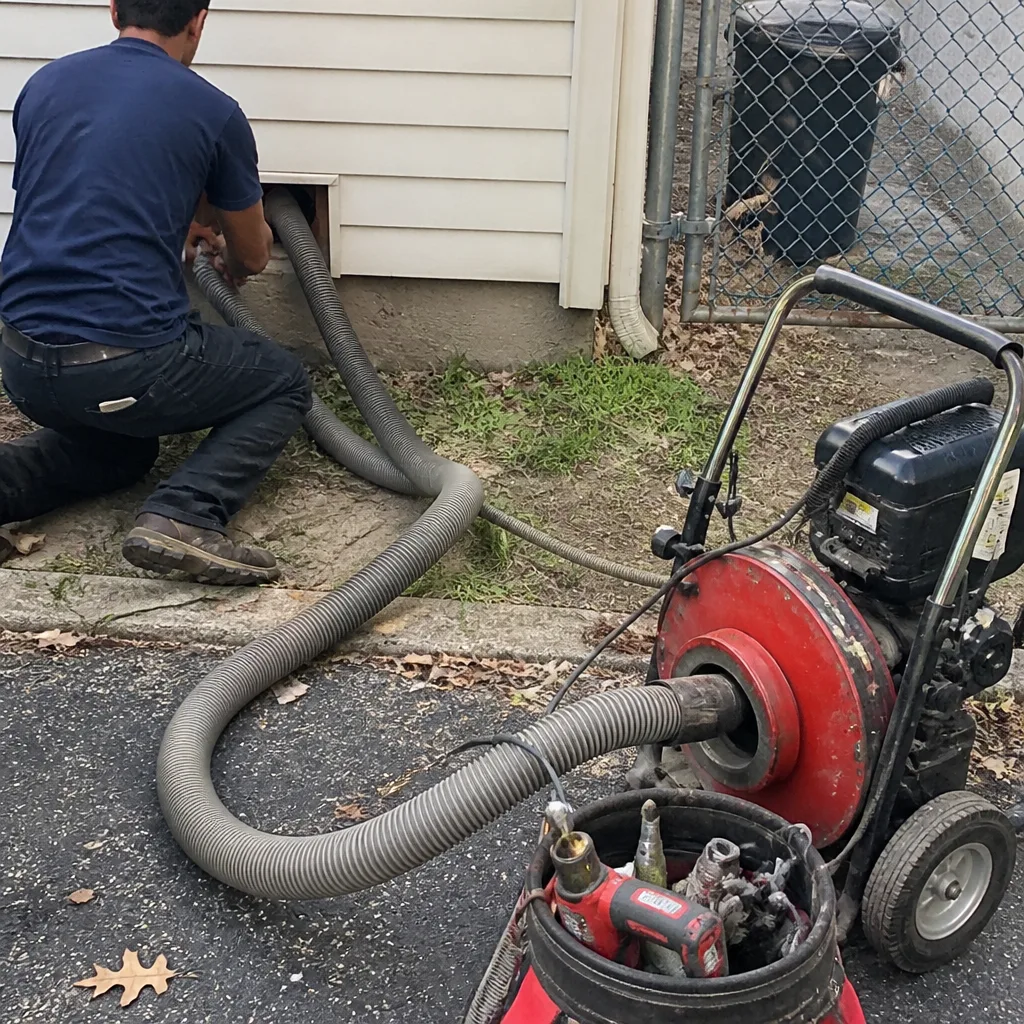 Before
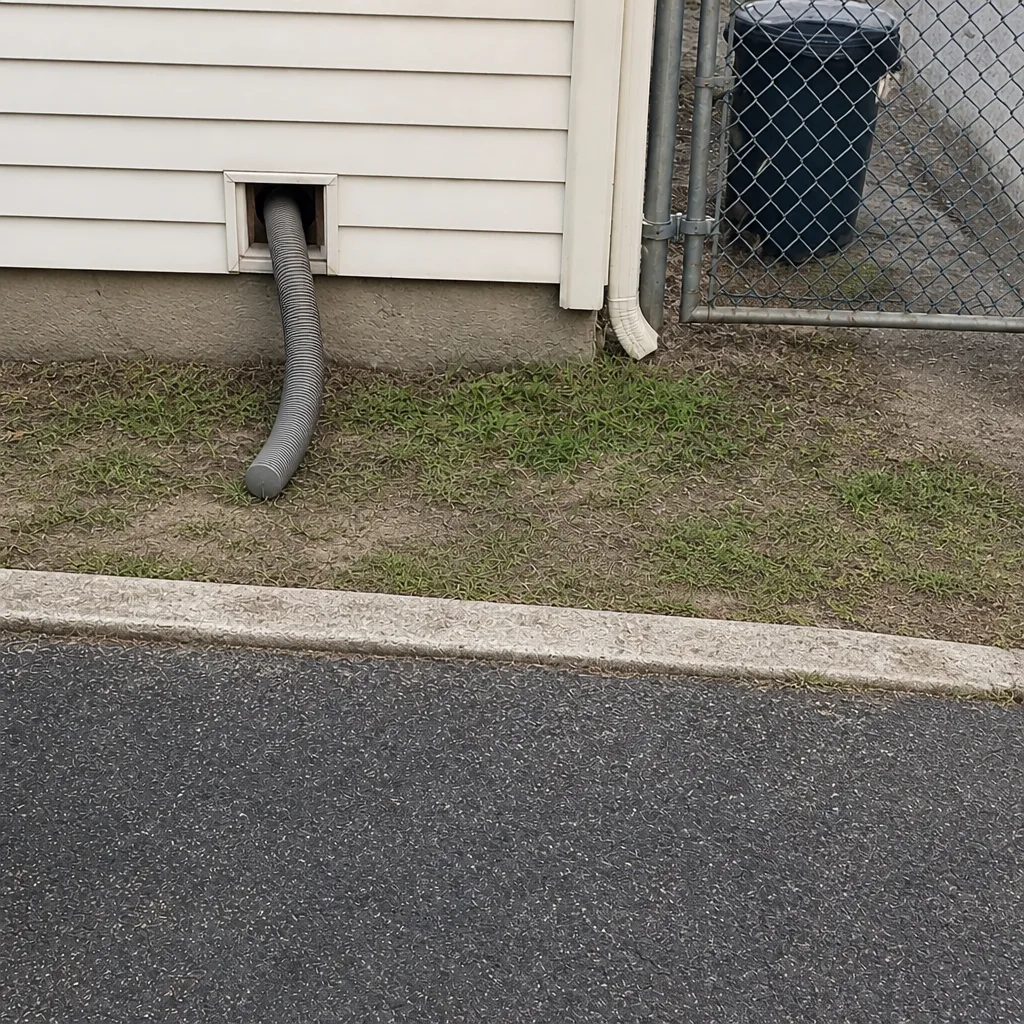 After
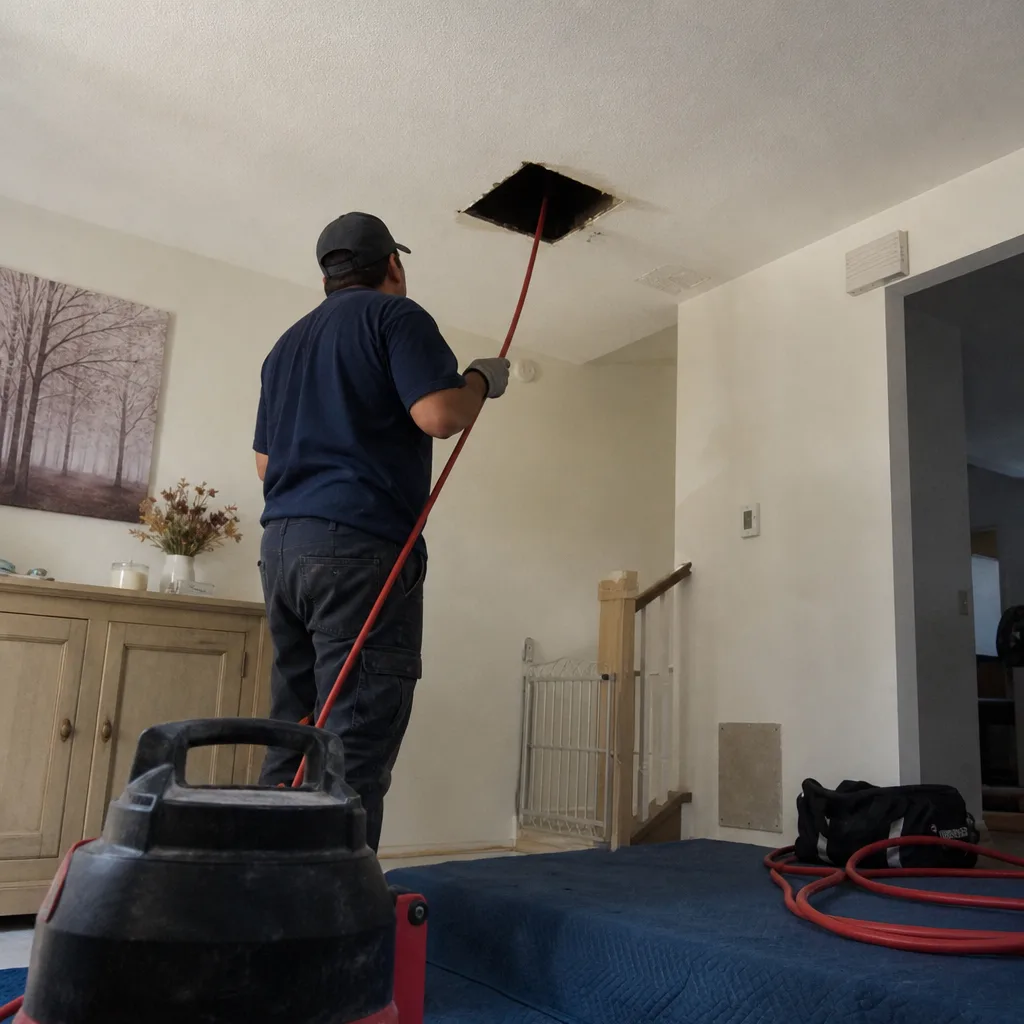 Before
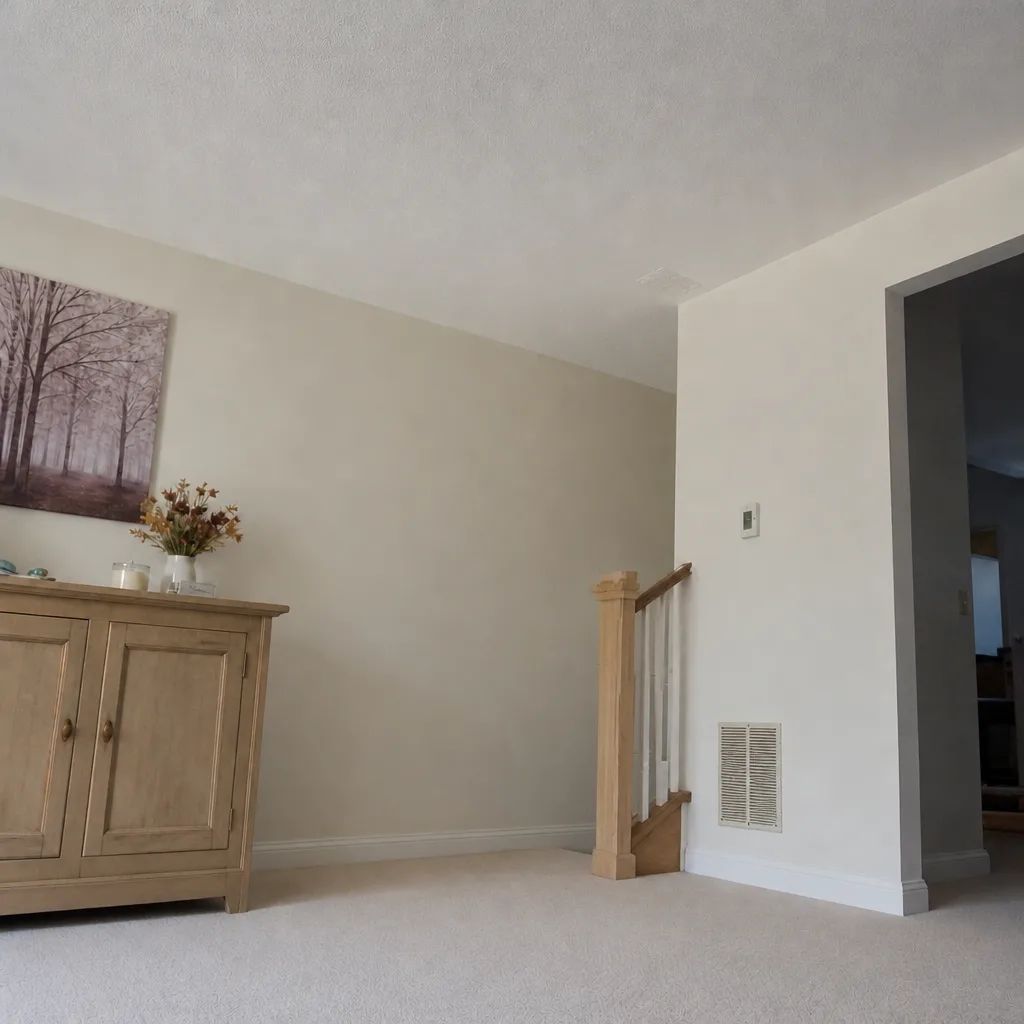 After
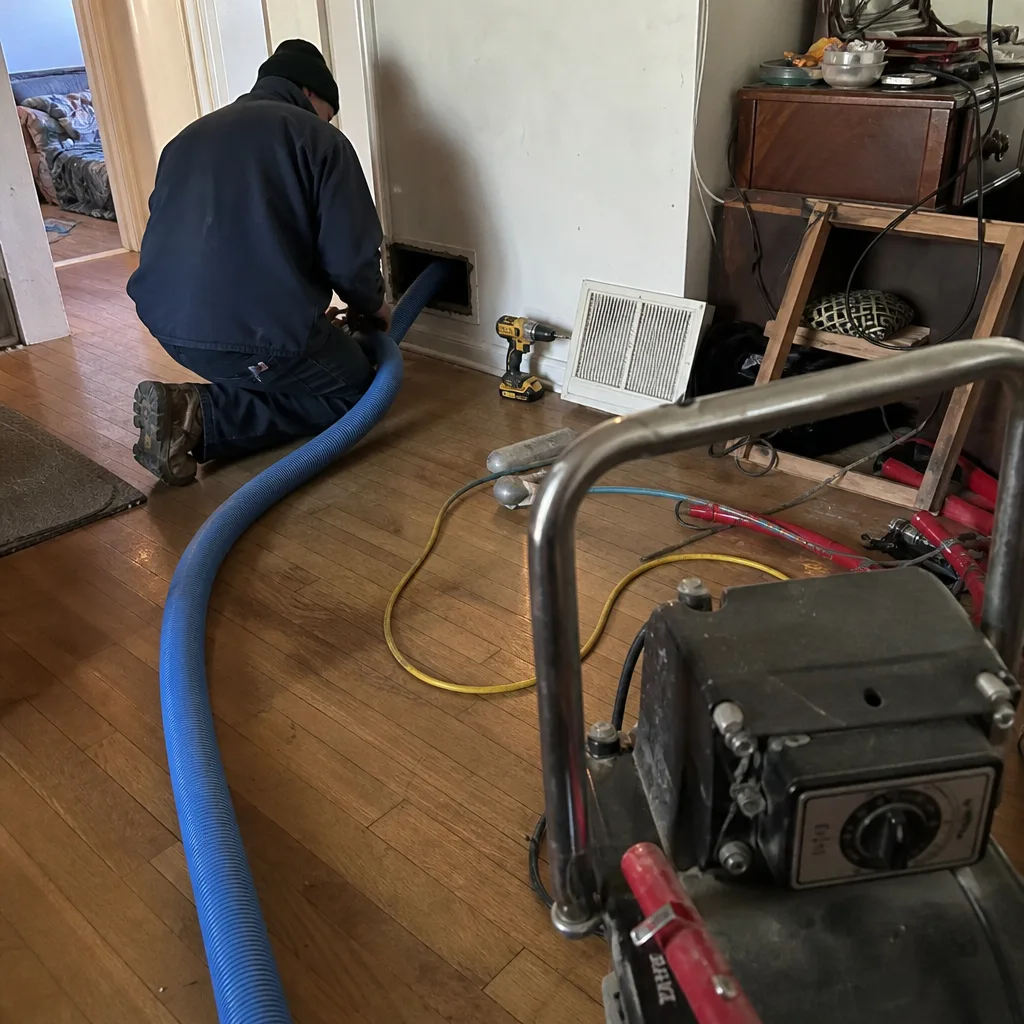 Before
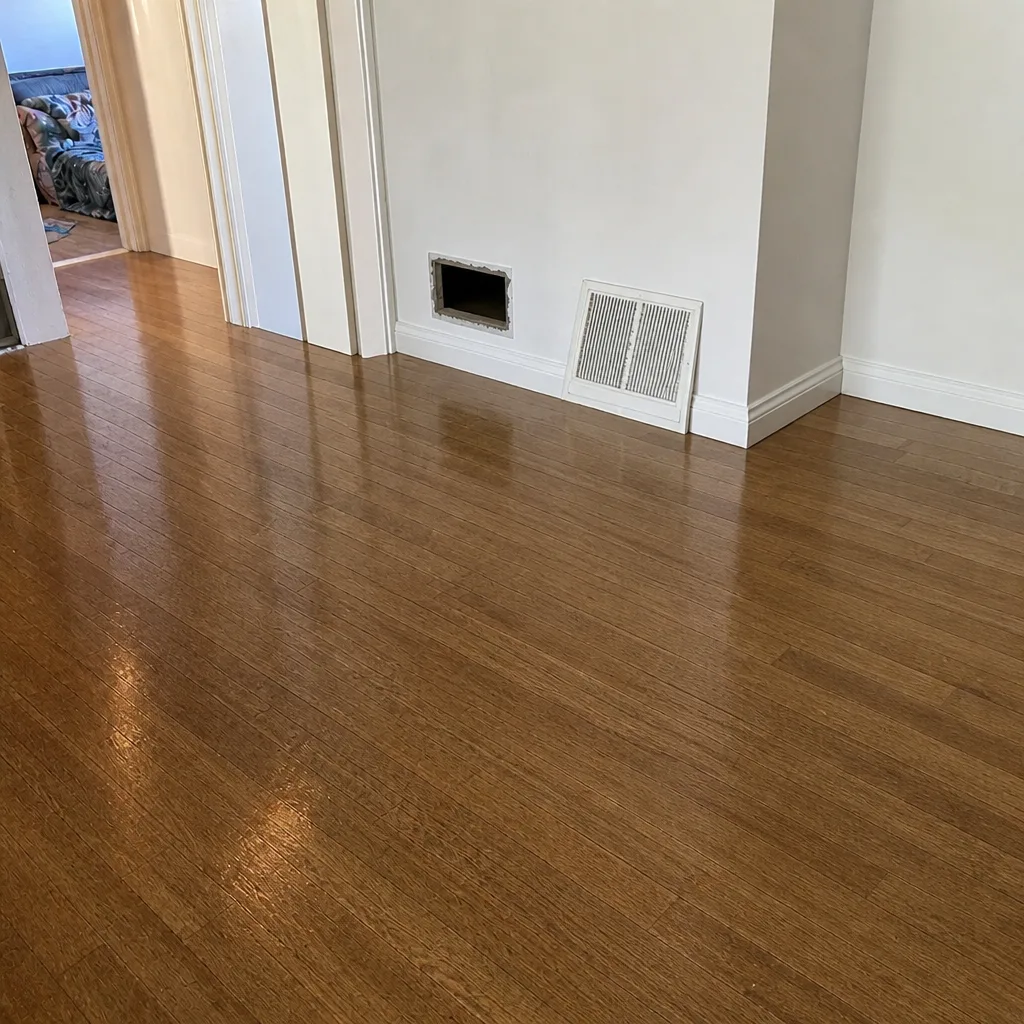 After
When to Call a Professional
If any of these apply, it’s time to have the system examined by someone with the right equipment rather than working through the checklists again: a musty smell that has returned across two heating or cooling seasons; two or more warning signs from this guide showing up together; visible dark growth on a register or the inside of a floor boot; a filter interval that has shortened by more than a third and stayed short; a recently completed renovation where drywall dust was released into the return side; a new HVAC install where the ductwork was not cleaned before commissioning; or a home where no duct cleaning has been done and the system is more than a decade old. Any of these justifies an inspection. Air Duct Cleaning New Dorp offers free estimates in New Dorp. Call (877) 759-0546.
Frequently Asked Questions
The most reliable early sign is a filter that dirties faster than its stated interval, sustained across two filter changes. It’s the one signal that is measurable, comparable over time, and hard to mistake for equipment trouble. Pair it with a room that has lost airflow and you have a strong case for an inspection. Call (877) 759-0546 for an exact quote – estimates are free.
For a typical residential whole-system cleaning in the New Dorp area, the range is usually set by the number of runs, the condition of the system, and whether repair or sealing is needed. We quote one flat price per system after inspecting, agreed before work starts, and we do not quote per vent or via a coupon price. Call (877) 759-0546 for an exact quote – estimates are free.
Cheap quotes usually cover a surface vacuum and a brush at the grille, without containment, without cleaning the coil or air handler, and without addressing leaks. That leaves the source of contamination in place, and a second call is often needed within a season. Our pricing reflects contact-based Rotobrush equipment, Nikro HEPA containment, and Abatement Technologies filtration on site. Call (877) 759-0546 for an exact quote – estimates are free.
Ask for before-and-after photos of your own system, taken at the same register positions before and after cleaning, plus a walkthrough of the coil and cabinet condition. A technician who has done the work can show you what changed. We document every job this way as a condition of the visit. Call (877) 759-0546 for an exact quote – estimates are free.
Most homes need it far less often than the coupons suggest. In our experience the interval is driven by conditions, not a fixed clock: pets, recent renovation, a new install, or a damp basement air handler each shorten it, while a clean, well-sealed system in a dry home can go much longer. Read your warning signs first, and clean on evidence. Call (877) 759-0546 for an exact quote – estimates are free.
No, and the reason is containment. A shop vacuum pulls some surface debris but recirculates the fine particulate back into the room, and it can’t reach the compacted soil that clings to duct walls. Professional contact-based equipment plus negative-pressure HEPA containment is what separates a cleaning from a dust event. Call (877) 759-0546 for an exact quote – estimates are free.
The Bottom Line
Your forced-air system is already telling you what’s going on inside. A room that’s harder to heat, a musty register, a filter that loads early, and uneven dust are all pieces of the same signal set – and reading them together lets you act months before a dramatic symptom forces the decision. The four odor types tell you where; airflow asymmetry tells you which branch; filter loading gives you a trend line; and the five inspection points let you check without touching anything risky. If the signs point to the system rather than the equipment, one flat price per system and a full-scope visit gets the loop closed. Our technicians have up to 15 years of experience in exactly this diagnostic work.
If two or more signals are showing up in your New Dorp home, don’t wait for the third. Call (877) 759-0546. We answer 24/7. Fast dispatch from 7am to 7pm, Sunday through Friday.
Written by the team at Air Duct Cleaning New Dorp.