
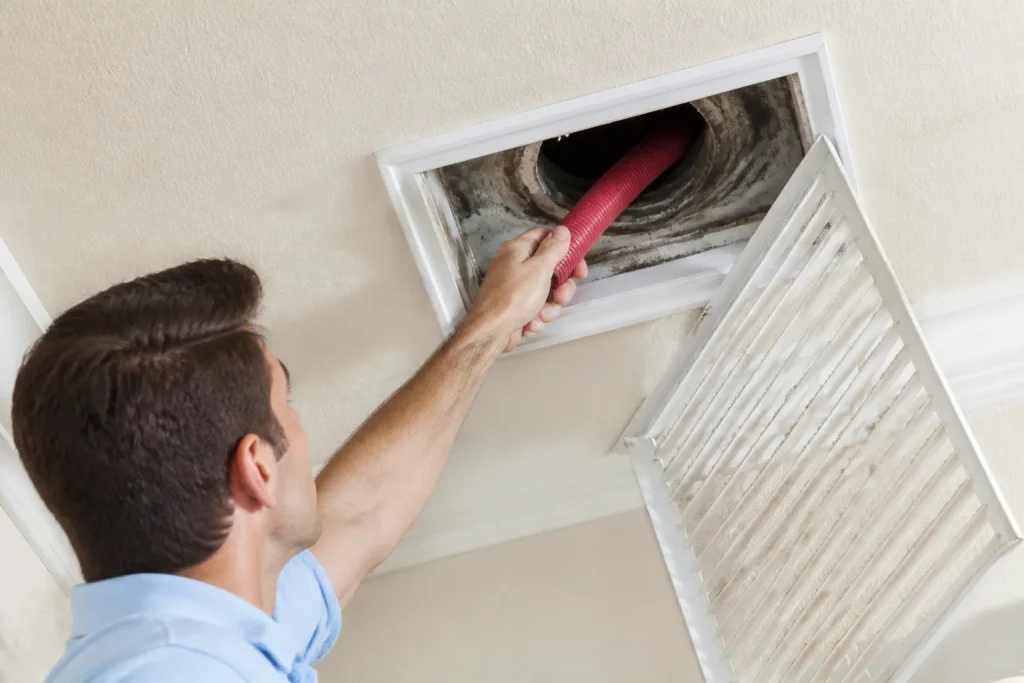
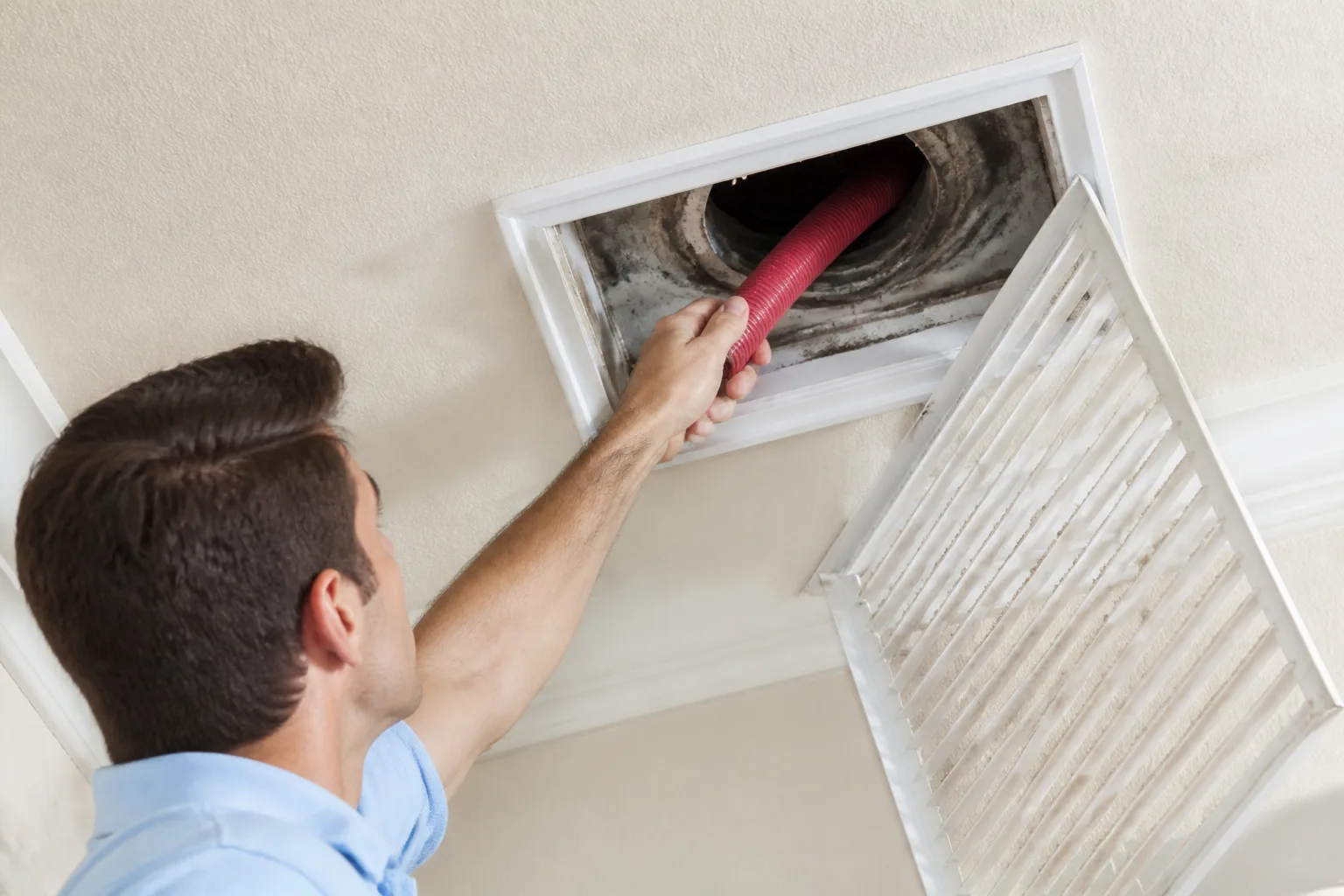
Top Signs You Need Air Duct Cleaning Service – Don’t Ignore These
Dust on your registers is almost never a sign that your ducts need cleaning. It’s usually just the filter doing its job, catching what the return pulls in and letting the rest settle on the surface. The signs that actually matter are subtler, and most homeowners don’t know what they look like. Here’s the short answer: you need air duct cleaning when a symptom traces back to the inside of the system rather than the air in the room. If you’d rather have someone inspect it than guess, call (877) 759-0546.
The hard part is telling a benign annoyance apart from a real problem. That’s what this piece is about: not a list of every possible complaint, but the diagnostic difference between a sign that means “change your filter” and one that means “stop running the system and call someone today.”
What do the signs of dirty ducts actually look like?
The signs of dirty ducts are usually sensory, not visual. You notice a smell, a temperature imbalance, or a symptom in the people living in the home before you ever see debris. Visible dust is often the least useful indicator. In our experience across New Dorp homes, the problems that justify cleaning hide in the air pathway where you can’t see them, and the ones people worry about most are often harmless surface dust.
Here’s a rough map of what to watch for, and what each sign tends to point to:
- Smell changes: a musty, metallic, or ammonia odor that appears only when the system runs.
- Uneven airflow: rooms that never reach temperature or feel pressurized when a door closes.
- Register patterns: dark streaking or discoloration around the grille rather than dust on it.
- Post-event triggers: renovation, rodent evidence, or water damage near a duct run.
- Symptom onset: respiratory complaints that start or worsen when the heat or AC kicks on.
Those last two categories are the ones people dismiss. They shouldn’t. Each points to a different cause, and each calls for a different response. We’ll take them one at a time. The full-system approach we use at Air Duct Cleaning New Dorp starts with figuring out which category you’re in before anyone touches a brush.
The three-smell test: what each odor points to
Smell is the most reliable early signal because your nose detects things your eyes can’t. But not all smells mean the same thing, and treating them as one category wastes money. Run the system on fan only and walk each room. Then match what you notice to one of these three.
Musty
A musty, cellar-like smell usually points to moisture and biological growth somewhere in the duct run or on the evaporator coil. The common culprit is condensation that never fully dries, often near the air handler or in a section with a poorly sealed joint. Musty is the category that most often justifies cleaning plus sanitizing, because the moisture problem and the growth have to be handled together. A cleaning that ignores the source of the dampness just resets the clock.
Metallic
A sharp, metallic odor that shows up when the heat first comes on is often just the heat exchanger warming up and dust burning off its surface. That’s normal on the first cold days. When it persists into the run cycle rather than fading after the first few minutes, it’s worth an inspection rather than a cleaning. Metallic is the sign that calls for a look before you spend money on ductwork. It may be a system issue, not a duct issue.
Ammonia
Ammonia is the one to take seriously. It’s often a sign of animal waste, and waste in a duct run means nesting, not just dust. If you catch an ammonia smell from a vent, stop running the system and get it inspected. That’s a contamination problem, and pulling air through a contaminated run distributes it into the rooms you’re trying to keep clean.
Three smells, three different responses. That’s the point. A competent air duct cleaning plan starts by identifying which one you’re dealing with, because the fix for each is different.
Why dust on registers is usually benign
Dust on top of a register or around the edge of a grille is normal and, most of the time, means nothing. The supply vents push conditioned air into the room; that air carries a little dust, and dust settles on the nearest surface. Your filter is doing its job. Changing it on schedule and wiping the grille is all that’s usually required.
What you actually want to look for is a pattern, not a covering. Here’s the difference:
- Even dust on the grille: normal. Airborne dust settling on a surface.
- Dark streaks radiating from the edges of the register: air is escaping around the boot and grille rather than through it. That points to a gap and a sealing problem, not a cleaning one.
- Discoloration that appears only in one room: the section serving that room may have a leak pulling in unconditioned air. One-sided staining on a diffuser is the same story.
The staining pattern is the tell. It’s a picture of air leaking where it shouldn’t, and leaks cost you efficiency regardless of how clean the inside of the duct is. This is why Duct Repair & Sealing sits alongside cleaning as a standard service, and why we repair the root cause rather than vacuum around it. When the joint is sealed, the streak stops. Vents, coils, and connections all belong to the same air pathway, so fixing the pattern means closing the gaps, not just wiping the grille.
The airflow asymmetry test: what uneven rooms reveal
Rooms that never quite reach temperature are the quietest sign of a duct problem, and the easiest to blame on the thermostat. The test is simple. Set the same temperature demand across the house and note which rooms lag. Then try the door test: close the door to a room and see whether it becomes hard to open or pushes air back at you.
Uneven rooms and pressure differences point to collapsed, disconnected, or badly sealed sections. A run that has come apart in the attic or joist space delivers a fraction of the air it should, so the room that served it runs cold or hot while the rest of the house is fine. You feel the symptom in one room; the cause can be anywhere along that run. This is the category where cleaning alone can’t help. If the section is disconnected, cleaning it is like cleaning a pipe that isn’t connected to anything. It has to be found and reconnected first.
A quick check on a cool morning can tell you a lot: hold your hand at each register for a few seconds. If one runs noticeably weaker than its neighbors on the same floor, that’s a diagnostic thread worth pulling. In a New Dorp home built on a raised foundation or with runs through an unconditioned attic, that imbalance is often the first thing we look for. The HVAC cleaning step is where a technician traces the whole path back to the air handler to see where the balance breaks down.
Post-event triggers that make cleaning non-optional
Most of the time, whether to clean is a judgment call. After certain events, it isn’t. A few triggers put you in the cleaning-first category without much debate:
- Renovation or major remodeling. Drywall dust and sawdust travel anywhere air moves, and construction debris settles inside duct runs and on the coil. This is why a fresh remodel is one of the most common reasons someone calls.
- Rodent evidence. Droppings, scratching, or an ammonia smell near a vent means animals in the run. This needs inspection and full-path cleaning, not a surface vacuum.
- Water damage near a duct run. If a roof leak, a pipe, or a flooded crawlspace affected a section of ductwork, moisture and growth are likely inside. Extended dampness on the coil or a moldy smell after water intrusion both put you here.
- New respiratory symptoms. If someone in the house started wheezing or reacting and the timing lines up with a renovation or a new HVAC install, the system is worth inspecting. That’s a symptom to solve, not to explain away.
Notice that the dryer vent belongs on your radar too, even though it doesn’t connect to the ducts. Lint buildup is a fire risk, and it’s a service too often skipped because it lives behind the machine and out of sight. That’s why dryer vent cleaning is part of the same service line: it’s part of the same air system in your home, and it’s the one with the safety consequence.
Inspection first or cleaning first: why the order matters
Here’s the trap. A cheap quote that skips inspection often cleans the wrong thing, or cleans around a problem instead of fixing it. If the real issue is a disconnected run or a moisture source, a cleaning alone will produce a clean duct that’s still broken. You pay once, and you’re back to the same symptom a few weeks later. Inspection first is what saves money, even though it feels like the slower route.
A proper inspection covers the whole air pathway, not just the branches you can reach from a register. It looks at the coil, the filter slot, the return, and the trunk lines, and it checks for leaks, gaps, and moisture. Only after that does the cleaning plan make sense, and only after that can anyone promise a single flat all-in price. Before-and-after photos are part of the answer here too: you should see the inside of your own ducts, not a stock image.
Our technicians have up to 15 years of experience, and the equipment is professional-grade throughout. That means Rotobrush rotary-contact cleaning to dislodge compacted debris from duct walls and Nikro HEPA-vacuum technology to hold the system under negative pressure while it happens. Combined with Abatement Technologies air-filtration units capturing particulates on-site, the contaminants are captured at the source rather than pushed back into your rooms. Adding Honeywell- or Aprilaire-compatible air quality solutions afterward is how the work extends beyond the day of cleaning.
When to call a pro
Call a pro when the smell keeps coming back after you’ve changed the filter, when one room never balances with the rest of the house, or when a renovation, rodent sighting, or water event has touched a duct run. Those signs need eyes on the inside of the system. Don’t call when the only sign is dust on a grille and a filter that’s overdue. Change the filter first. If you’re not sure which side of the line you’re on, the phone call costs nothing and saves the guesswork.
Related services in New Dorp: cleaning, dryer vent, HVAC, repair and sealing, and sanitizing are all handled together, so a complete system check doesn’t mean coordinating four contractors.
The Bottom Line
The signs that matter hide in plain sight. A musty smell, a metallic overtone that won’t fade, ammonia near a vent, a room that never balances, dark streaks around a register, or a recent renovation with debris in the system: those are the ones that justify a look. Dust on a grille is not. The difference between “change your filter” and “stop the system and call” is the difference between a nuisance and a contamination problem, and knowing which one you’re facing is what keeps you from paying for the wrong fix.
If you’re in New Dorp and need help, Air Duct Cleaning New Dorp offers free estimates. The price is set per job, agreed before any work starts, so there’s no surprise on the invoice. Call (877) 759-0546. We answer 24/7. Fast dispatch from 7am to 7pm, Sunday through Friday.
Frequently Asked Questions
Your ducts need cleaning when the sign points to the inside of the system, not to surface dust. A musty, metallic, or ammonia smell from the vents, uneven airflow between rooms, dark streaks around a register, or a recent renovation, rodent event, or water damage near a duct run all justify an inspection. Dust sitting on top of a grille is usually not a sign. When in doubt, call (877) 759-0546 for a free estimate.
Not always, but it’s the smell to take seriously. A musty odor usually points to moisture and biological growth somewhere in the run or on the evaporator coil, often where condensation never dries. It can also come from a damp crawlspace or attic near a leaky joint. Inspection finds the source before anyone cleans. Call (877) 759-0546 to schedule one.
Inspect first. Cleaning without inspection risks cleaning around a broken section, a disconnected run, or a moisture source, which means the symptom returns and you pay twice. Inspection shows whether the problem is debris, a leak, or moisture, and the cleaning plan follows from that. A free estimate starts the process. Call (877) 759-0546.
There’s no fixed interval that fits every home. Most ductwork doesn’t need cleaning on a calendar schedule. It needs cleaning when a trigger shows up: a renovation, rodent activity, water damage, visible growth, or symptoms that track with the system running. If none of those apply and your filters are changed on schedule, inspection is the better first move. Call (877) 759-0546 and we’ll tell you honestly whether you need it.
Dust on registers is usually benign. It’s airborne dust settling on a surface, and your filter is doing its job. The pattern matters more than the dust: dark streaking around the edges of a grille or discoloration in only one room points to a leak or gap, which is a sealing issue. If the pattern looks one-sided, call (877) 759-0546.
Written by the team at Air Duct Cleaning New Dorp.
Need Air Duct Cleaning Help?
Call Air Duct Cleaning New Dorp - the local pro we connect you with is licensed and insured, here with fast help in New Dorp.
(877) 759-0546